Pacific Northwest Golfer
Golfer Magazine
Pacific Northwest Golfer is the premier magazine for golf enthusiasts in the region.

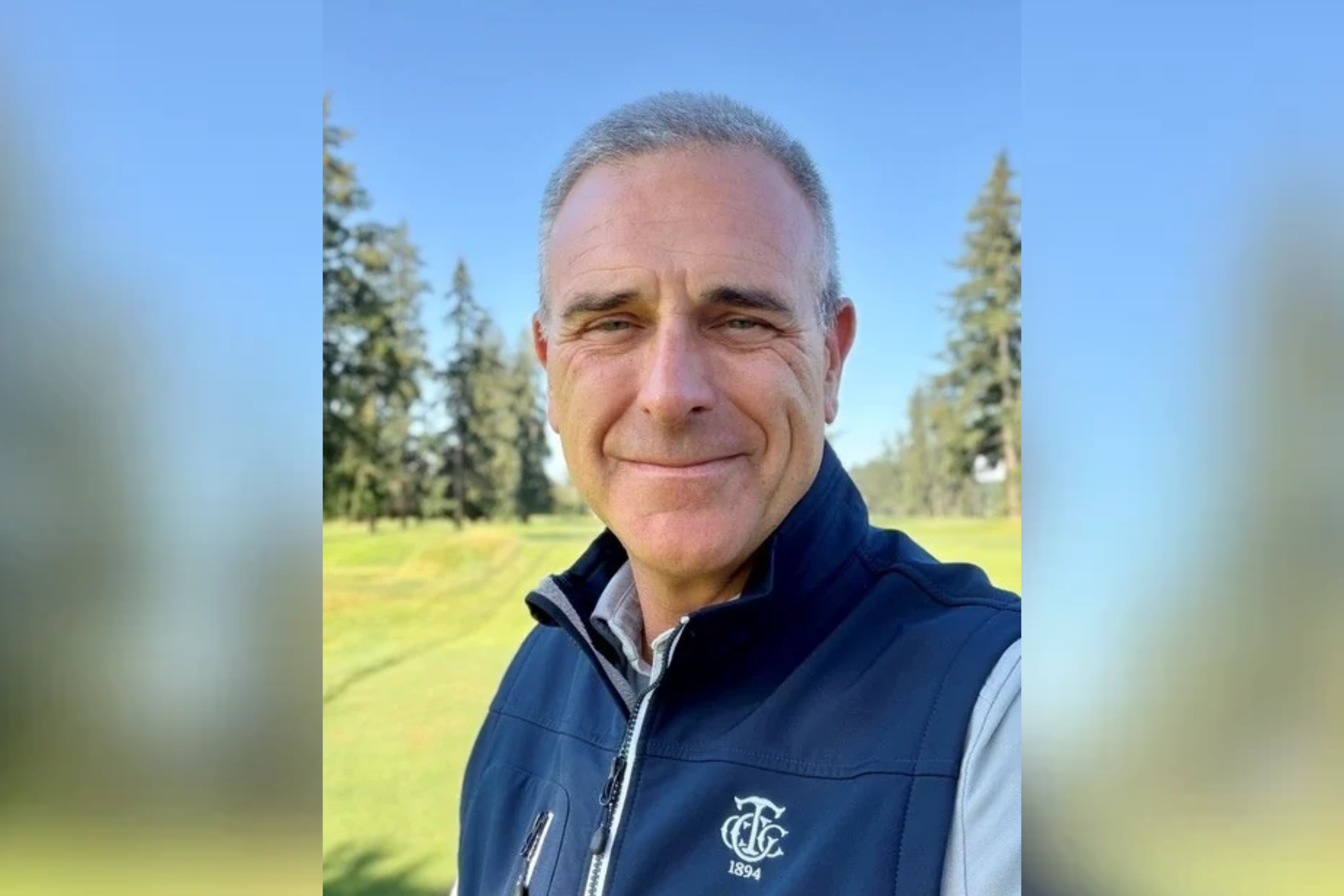
For more than three decades, Joel Kachmarek’s career has been closely connected to Tacoma Country and Golf Club. He first joined the club as Assistant Superintendent in 1993 and, except for a brief stop at Kitsap Golf and Country Club, has spent nearly his entire professional life there. In May 1999, he returned as Golf Course Superintendent, a position he has now held for more than 27 years.
That longevity has given Kachmarek something few superintendents experience: the opportunity not only to care for a historic golf course, but also to watch it evolve, reconsider earlier decisions and gradually guide it back toward its original character.
Finding His Calling at Oregon State
Kachmarek was born near the town of Sweet Home, Oregon. His father was a pastor, and the family moved to Idaho for three years before returning to the Portland area. He attended Portland Lutheran High School in Gresham, a small private school where his graduating class numbered just 13 students.
Golf entered his life through his father, who regularly played with other pastors on Mondays. At the time, many golf courses informally allowed members of the clergy to play for free on Mondays, and a young Kachmarek frequently accompanied his father as a caddie. Eventually, he began playing with his dad and developed a lasting connection with the game.
His interest in turf appeared early as well.
“When my mom asked me to mow the lawn, it wasn’t really a chore,” he recalled. “I enjoyed it. I would scalp the lawn down and try to make it into a putting green so I could play with my Wiffle golf balls.”
Despite those early signs, Kachmarek arrived at Oregon State University in 1989 without knowing golf course management could be a career. He initially studied fisheries science, envisioning the possibility of somehow fishing for a living. Once he discovered Oregon State’s turfgrass management program, however, his direction became clear.
“I found out there was such a thing as a turf program and changed majors,” he said. “It definitely seemed like my calling. I’m more of a hands-on, practical kind of guy.”
During his summers at Oregon State, Kachmarek interned at Pumpkin Ridge Golf Club, then a major new golf development near his parents’ home. After graduating in 1992, he worked at Pumpkin Ridge full time for six months before accepting the assistant superintendent position at Tacoma Country and Golf Club in 1993.
Kachmarek had spent little time outside Oregon and Idaho before moving north, but the South Puget Sound region quickly became home.
After four years as Tacoma’s assistant superintendent, Kachmarek left to become superintendent at Kitsap Golf and Country Club in Bremerton, Wash. In 1999, he returned to Tacoma Country and Golf Club as superintendent.
Today, it is difficult to separate his professional story from that of the club itself.
Tacoma Country and Golf Club traces its history to 1894 and describes itself as the oldest country club west of the Mississippi River. Its founders included graduates of the University of St. Andrews who recognized something familiar in the native oak prairie of the South Puget Sound region. To them, the open landscape recalled the linksland on which they had learned the game.
That history has increasingly influenced Kachmarek’s philosophy for the property.
Over the decades, the course—like many historic clubs—had accumulated trees, ornamental plantings, manufactured mounds and other features inspired by changing trends. Kachmarek acknowledges that he participated in some of those changes early in his tenure. His thinking began to shift after playing Bandon Dunes and experiencing a golf course that seemed to emerge naturally from the land.
“Golf courses in those days were discovered; they weren’t created,” he said. “Somebody took the time to look at the land, decide on the routing and determine the best use of the property.”
That experience caused him to reconsider what Tacoma Country and Golf Club must have looked and felt like when its founders first laid it out. Since then, much of his work has focused on removing visual clutter, restoring the native character of the property and protecting its threatened Garry oak trees.
“I want people, when they come here, to feel that it is old,” Kachmarek said. “I want it to be an experience of turning back the clock a little bit, not just another walk through a park.”
What continues to motivate Kachmarek after so many years is the opportunity to make improvements that will endure.
Because the club must approach major work methodically, progress often comes through carefully planned annual projects—a tree-removal initiative one year, a tee-leveling project the next. Each completed project becomes another visible step toward his long-term vision.
“You plan for it, you execute it, and the next year you get to look at it and see the improvement,” he said. “If I can make lasting improvements to this amazing piece of property that people have been golfing on and adjusting for more than 130 years, I would love to be remembered as somebody who made a difference.”
He also wants the work being done today to remain relevant well into the future, rather than becoming another reflection of a passing design trend.
“I’d like what we’re doing there to last indefinitely,” he said. “I don’t want to see it succumb to another trend.”
Kachmarek credits the club’s membership for increasingly embracing that vision. He also considers himself fortunate to work with the property’s exceptional natural advantages, including its free-draining, gravelly glacial soils.
The course has virtually no conventional drainage system, yet it handles the Pacific Northwest’s wet climate remarkably well. In areas where years of traffic and mowing create a compacted surface layer, Kachmarek and his team can often restore drainage simply by penetrating that layer and reaching the porous soil beneath it.
The conditions allow his team to mow and complete improvement projects throughout the year, an opportunity Kachmarek does not take for granted.
“I love being able to do things year-round,” he said. “I can go out during the winter, fix something, level something or improve it so that the next year we have a better product.”
Family, Fishing and the Future
Away from the golf course, family remains central to Kachmarek’s life. He and his wife recently celebrated their 24th wedding anniversary, and he is the father of four adult children. He also has grandchildren, with another expected in January.
When his children were younger, family life often centered around a cabin in Packwood, located south of Mount Rainier, and weekends skiing at White Pass. The family eventually sold the cabin after the children grew older and their schedules became busier, but Kachmarek remembers those years fondly.
Today, he especially values the occasions when all four children can gather at the family home.
Kachmarek and his wife live on a couple of acres in Tacoma, where caring for the property, chickens and dogs occupies much of his free time. If given the choice, however, he would happily spend considerably more time fly fishing.
Each March, he travels to Eastern Washington for a three-day fly-fishing trip with his brothers, a tradition they have continued for approximately 25 years. The annual trip has become both an important family ritual and a marker on Kachmarek’s calendar.
“It’s really special time together because I’m very close to my brothers,” he said. “It’s also the start of my season. When I come back, it’s nearly April, it’s time to aerify, and then it’s gangbusters for the next six months.
Kachmarek describes himself as private and not particularly social, though his colleagues may simply see someone they would like the opportunity to know better. His understated manner belies the depth of thought he has devoted to his profession and to the piece of ground he has cared for during most of his adult life.
He’ll retire some day, leaving more time for family, his property and—as he puts it—fly fishing every day. Before that happens, however, there is still work he wants to complete at Tacoma Country and Golf Club.
After more than 27 years as superintendent, Kachmarek’s motivation is not simply to maintain what exists. It is to uncover the course’s history, protect what makes it special and leave behind a property that feels as timeless as the game itself.
“I’m just not done,” Kachmarek said. “There’s still stuff to do.”

Pacific Northwest Golfer
Pacific Northwest Golfer is the premier magazine for golf enthusiasts in the region.